Watch and Clock Escapements
  • Overview
  • Mechanical Escapements
  • Liquid-Driven

Mechanical Escapements

Contents

Anchor Escapement
  • ​​Strip-Pallet Recoil (Metal Strip Type Escapement)
  • ​Brocot Escapement (pin-pallet escapement)​
​​​Audemars Piguet Escapement
​​Coaxial Escapement
Constant Escapement
​Cross-beat Escapement
​​Cylinder Escapement
​​Daniel's Independent Double Wheel Escapement
​​Deadbeat/Graham Escapement
​​Detent/chronometer Escapement
​​Duplex Escapement
​Dual Direct Escapement
​Dual Ulysse Escapement
​Échappement Naturel (Breguet Escapement)
​Eleta Escapement
​Fasoldt Escapement
​Grasshopper Escapement
​Gravity Escapement
​Haldimann Escapement
Lever Escapement
  • English Lever Escapement
  • Glashuetten Lever Escapement
  • Swiss Lever Escapement
  • Mueller Lever Escapement
​​Pin Wheel/Amant/Mannhardt Escapement
​​Pin-Pallet/Roskopf/Pin-lever Escapement
​Riefler/Spring Pallet Escapement
​Robin Escapement
Spider Escapement
Strasser Escapement
Tic-Tac Escapement
Ulysse Anchor Escapement
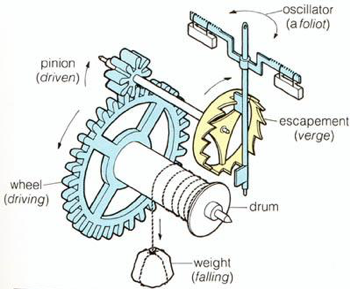
Verge and Foliot Escapement
Würtz Escapement

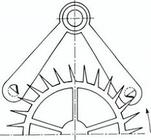
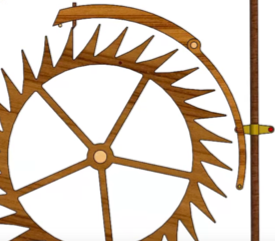
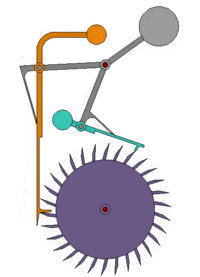
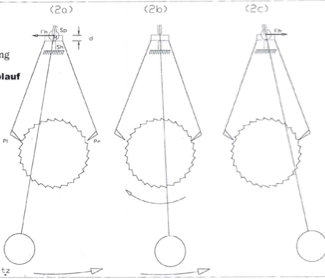
Anchor Escapement

Original
  • probably Robert Hooke, 1657 some credit William Clement who popularized the anchor escapement with his longcase clocks, 1680
  • Standard for pendulum clocks
  • Problem: swing of pendulum pushes escape wheel backward during part of cycle, recoil causes inaccuracy and reverses direction of gear train, causes backlash, high loads=friction and wear
Picture
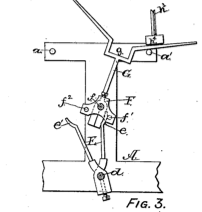
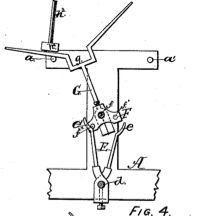
Strip-Pallet Recoil (Metal Strip Type Escapement)
  • Used in inexpensive clocks
  • Bend strip of steel so that its ends form the R and L pallets
  • Allows for manufacturing at low costs for labor and material
Picture
​Brocot Escapement (pin-pallet escapement)​
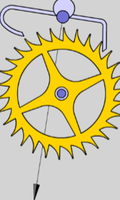
  • Invented 1823 by Louis-Gabriel Brocot, improved by Achille Brocot, 1849
  • Called “pin-pallet” but is really a variation of the anchor escapement
  • nearly deadbeat, robust and reliable, but suitable only for half-second pendulums or shorter (large angular amplitude needed)
Picture

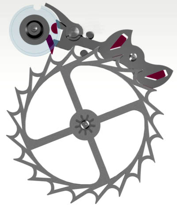
​Audemars Piguet Escapement

  • Inspired by Robin escapement
Advantages
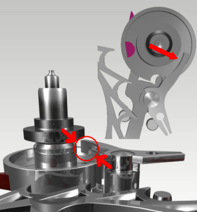
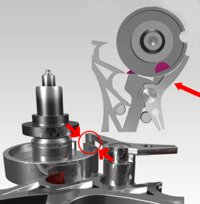
  • Offered absolute protection against shocks through a “safety finger” mechanism
  • Less moving parts compared to Swiss lever escapement
  • Need for oil eliminated
Picture
Picture
Picture

​Coaxial Escapement

  • George Daniels (1974, patented 1980) classifiable as detached, adopted by Omega (1999)
  • Didn’t need lubrication (one of the main causes of degradation for timepieces)
​3 levels
  • Level 1: balance wheel contacts pallet fork; guard pins
  • Level 2: inner escape wheel w/ 12 teeth
  • Level 3: outer escape wheel w/ 12 teeth
  • Pallet fork is in contact with both levels of escape wheels
Picture
Picture

​Constant Escapement

  • Nicolas Déhon (patent submitted by Rolex), developed by Girard-Perregaux, 2008
  • in watches by 2013
  • key component: silicon buckled-blade acting as micro-accumulator of energy
Picture

​Cross-beat escapement

​Jost Bürgi invented in 1584, variation of verge with two foliots rotating opposite directions
Picture

​Cylinder Escapement

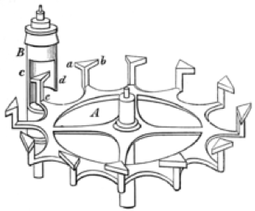
  • Thomas Tompion, 1695 and perfected by George Graham, 1726
  • Replaced verge escapement in pocket watches after 1700
  • Thinner than verge
  • High end watches had cylinders of ruby
  • mid-19th and 20th century, French made cylinder and escape wheel out of hardened steel solving problem of excessive wear
Picture
Picture
Picture

​Daniel's Independent Double Wheel Escapement

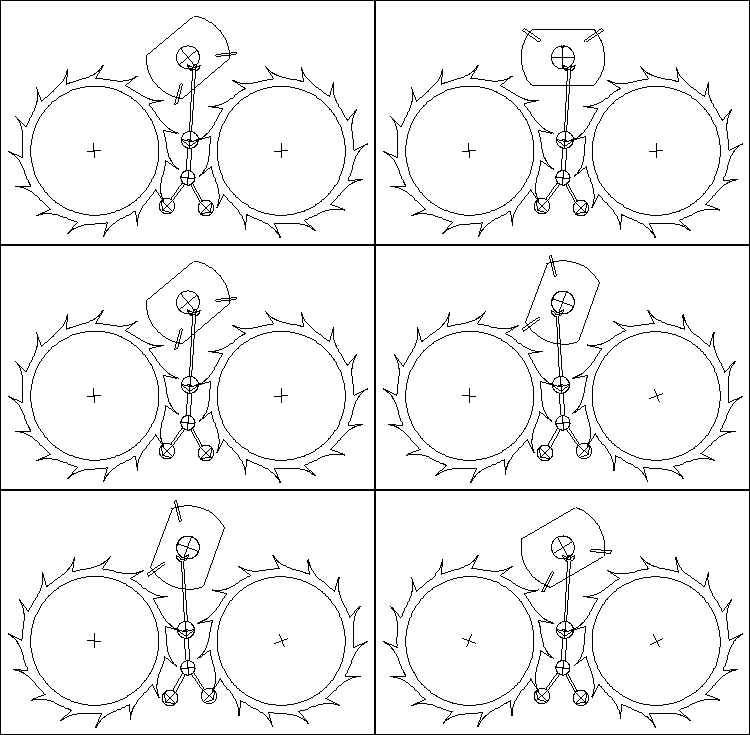
invented by George Daniels in 1974
Picture

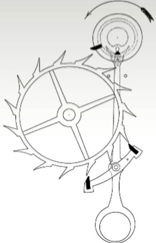
​Deadbeat/Graham Escapement

  • Design by Richard Towneley, made by Thomas Tompion, 1675
  • Credited to Tompion’s successor, George Graham who popularized it in 1715
  • Got rid of recoil, separated locking and impulse action of escapement
Picture
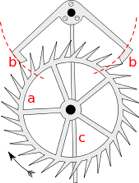
(a) Escape wheel
(b) Pallets
(c) Pendulum crutch

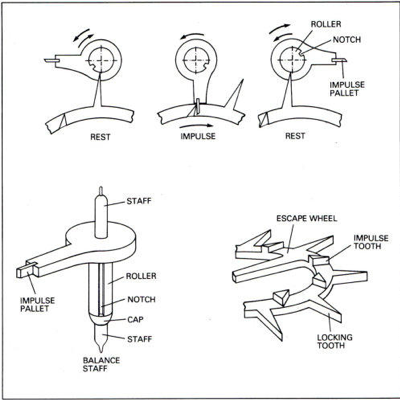
​Detent/chronometer Escapement

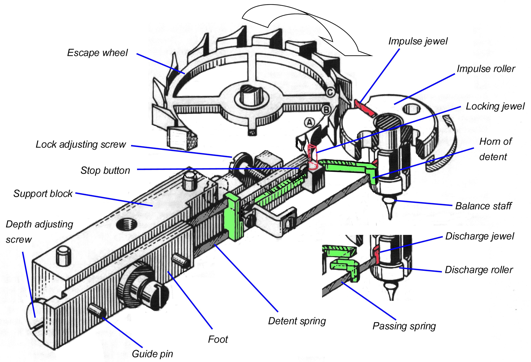
  • Pierre Le Roy, 1748 (early form) created pivoted detent type of escapement (theoretically deficient)
  • John Arnold, 1775, created first effective design
  • Thomas Earnshaw, 1784, modified it into spring detent which was patented by Thomas Wright (who he worked for)
  • Final form in 1800
  • 1779, John Arnold ad Ferdinand Berthoud had their own designs, but neither were as popular as Earnshaw’s
  • Most accurate of balance wheel escapements, used in marine chronometer, more accurate than lever escapement
Function
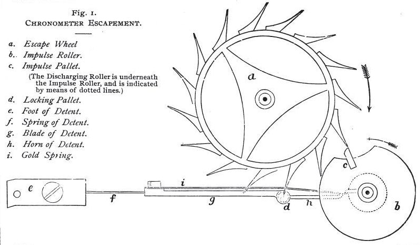
  • detached escapement, allows balance wheel to swing unperturbed during most of cycle except for brief impulse period (once per cycle or every other swing)
  • driving escape wheel tooth moves almost parallel to pallet, escapement has very little friction, no need for oiling
​Problem: fragile, need skilled maintenance, not self-starting, hard to manufacture in volume
Picture
Picture

​Duplex Escapement

  • Robert Hooke, 1700 and improved by Jean Baptiste Dutertre and Pierre Le Roy, final form by Thomas Tyrer who patented it in 1782
  • Much higher accuracy than cylinder escapement, equaled early lever escapements, almost as good as detent escapement
  • English pocketwatches 1790 to 1860 and American cheap ones 1880-1898 (Waterbury)
Function
  • One impulse per cycle
  • Escape wheel has two sets of teeth
  • Known as a frictional rest escapement: tooth resting against roller adds friction to balance wheel during swing
  • Little lubrication needed (little sliding friction during impulse)
Problem: lost to lever escapement due to sensitivity to shock, not self-starting
Picture

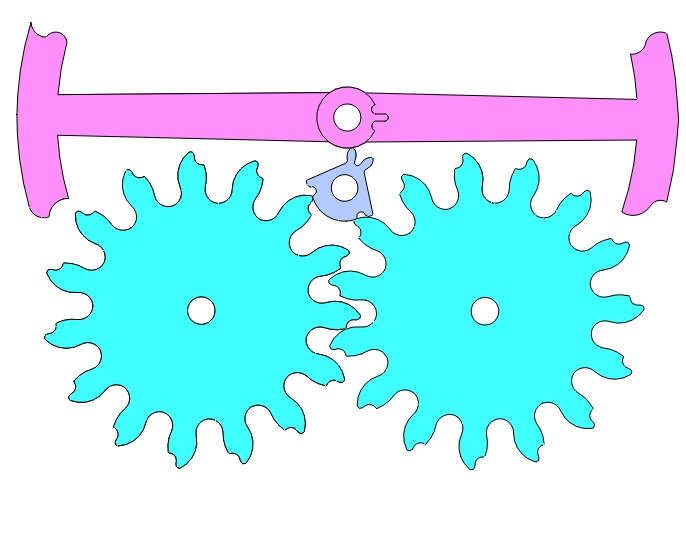
​Dual Direct Escapement

  • Invented by Dr. Ludwig Oechslin and showcased in Ulysse Nardin Freak watch in 2001
  • Inspired by Daniel’s independent double wheel escapement
Picture

​Dual Ulysse Escapement

  • increased balance frequency from Dual Direct
  • invented by Dr. Ludwig Oechslin in 2004
Picture

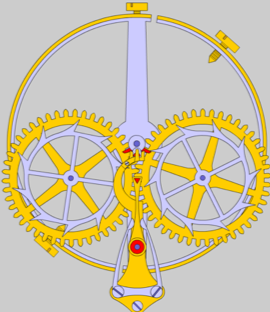
​Échappement Naturel (Breguet Escapement)

  • Invented by Abraham Louis Breguet, 1802
  • Only about 20 watches made with this escapement
  • Advantage
    • solved problem of detent escapement stopping and not being self-starting and lubrication of lever escapement
    • doesn’t require oil
    • impulse produced close to dead point
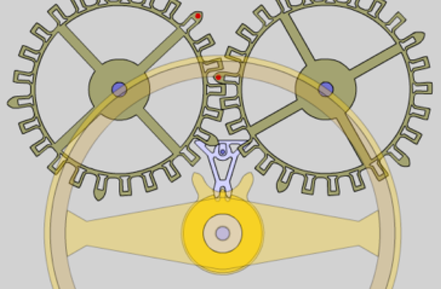
  • Two escape wheels geared together; one escape wheel driven by the fourth wheel of the wheel train which, in turn, was geared to and drives second escape wheel
  • pivoted detent swings freely between escape wheels and locks each escape wheel on coaxial set of locking teeth 
Picture

​Eleta Escapement

​Created by Miki Eleta, 2011
Picture

​Fasoldt Escapement

  • Invented and patented by Charles Fasoldt, 1859 (more like 1884)
  • Impulse in one direction only
Picture
Picture

​Grasshopper Escapement

  • John Harrison, 1722
  • Pendulum driven by two hinged arms (pallets)
  • Problem: wear out too quickly, waste too much energy
Picture

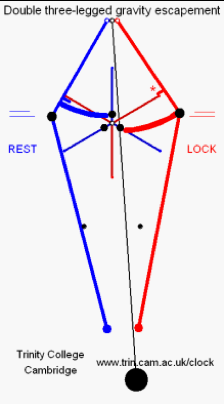
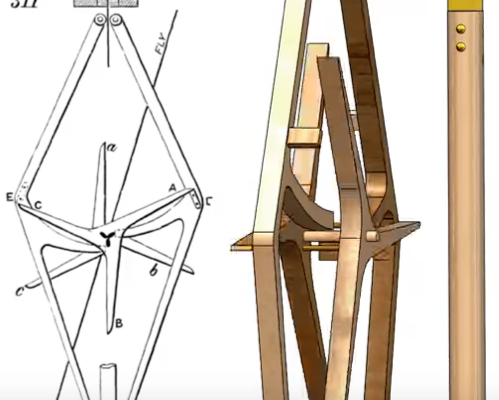
​Gravity Escapement

  • uses small weight or weak spring to give direct impulse to pendulum
  • double three-legged most popular
Picture
Picture

​Haldimann Escapement

  • Beat Haldimann, 2000
  • Combined properties of Graham and Strasser escapement
  • Although very accurate, it was a century too late since the atomic era had begun
  • Maintained 0.1 seconds per day
Picture

Lever Escapement

  • Advantage: detached escapement, self-starting
  • Cheap, less accurate form: Roskopf or pin-pallet escapement (Gearges Frederic Roskopf, 1867)
English Lever Escapement
  • Thomas Mudge, 1755
  • comprised of escape wheel, anchor-like pallet fork, balance wheel, hairspring
Picture
Glashuetten Lever Escapement
  • Ferdinand Adolf Lange of a little town called Glashuetten, 1852)
Picture
Swiss Lever Escapement
  • mid nineteenth century Switzerland
  • probably team effort
  • same parts as English version
  • pallet shaped like fork: centered balance wheel, pallet fork and escape wheel aligned in one line making power transmission more efficient and stable
Picture
Mueller Lever Escapement
  • Hugo Mueller, 1924, Glashuetten in Saxony
  • Different design and type of banking pin
  • Pallets were shorter
    • Supposed to have advantage of oil staying in place
    • (a little oil is filled in at locking face of entry pallet which then accumulates at front corner
    • (teeth of escape wheel constantly draw oil from “reservoir”)
  • most important difference: allocation of impulse
    • impulse plane of escape wheel and pallets are never parallel
    • has advantage that adhesion at the impulse plane can not occur
    • adhesion depends on viscosity which rises when oil gets older which would have a negative effect on energy balance of escapement
Picture

​Pin Wheel/Amant/Mannhardt Escapement

  • Louis Amant, 1741
  • Version of deadbeat that can be made rugged since it uses round pins that are stopped and released by scissor-like anchor instead of teeth
  • Often used in tower clocks
Picture
Picture

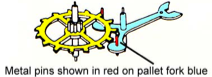
​Pin-Pallet/Roskopf/Pin-lever Escapement

  • Patented by Georges Frederic Roskopf, 1867
  • Cheap, less accurate form of Lever escapement
  • Brocot escapement is a type of pin pallet
Picture

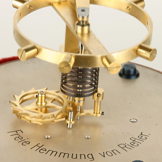
​Riefler/Spring Pallet Escapement

  • Invented by German instrument maker Signmund Riefler in 1889
  • Used in astronomical regulator clocks by his German firm Clemens Riefler from 1890 to 1965
  • Improvement of deadbeat
  • Riefler clocks achieved accuracy of 10 milliseconds per day, guaranteed to be within 30 milliseconds
Picture

​Robin Escapement

  • Robert Robin, 1792
  • Single impulse in one direction only
  • inspired by both Swiss escapement and detent escapement
  • extremely sensitive to shocks, very complex
Picture

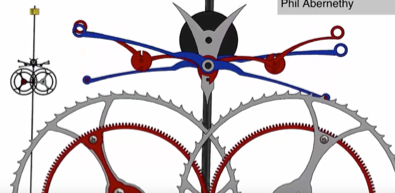
​Spider Escapement

created by Phil Abernathy in Parry Sound, Ontario, Canada
Picture

Strasser Escapement

  • Ludwig Strasser, 1900
  • Impulse delivered from pendulum through spring to lever
  • Pallet has very limited movement
Picture

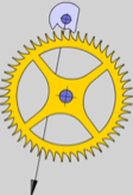
Tic-Tac Escapement

Used in French drum clocks with a rigid pendulum
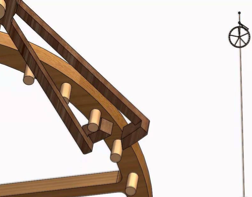
Picture

Ulysse Anchor Escapement

  • circular silicone frame
  • pallet arms are suspended by two buckled blades that are – curved under tension – one perpendicular to the other
Advantages
  • no need for lubrication
  • slimmer movement
  • less loss of energy
  • antimagnetic properties
Picture
Picture

Verge and Foliot Escapement

  • Early large mechanical clocks (1275)
  • first watches (shortly after 1500) with early examples made by Peter Henlein
  • Freely swinging horizontal bar (foliot) attached to centrally-located vertical shaft (verge)
  • Weight driven
Picture

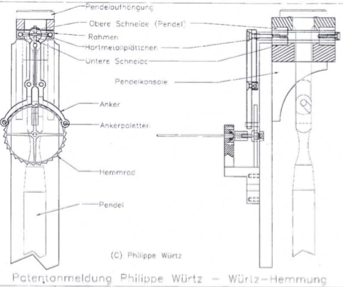
​Würtz Escapement

Created by Philippe Würtz, 2001
Picture
Picture
Powered by Create your own unique website with customizable templates.
  • Overview
  • Mechanical Escapements
  • Liquid-Driven